As crypto adoption rises, so do security threats. This guide outlines 10 field-tested methods to protect your wallet from hacks, loss, and unauthorized access. Learn how to store your seed phrase, pick the right wallet, and avoid costly mistakes.
Cryptocurrencies have revolutionized the way we handle money and investments. The convenience and potential for growth in the crypto space are undoubtedly appealing, but they also come with significant responsibilities. Chief among them is the need to keep your crypto wallet secure. This guide is here to help you navigate the intricacies of safeguarding your digital assets.
Cryptocurrency wallets hold the keys to your financial kingdom, and if these keys fall into the wrong hands, your hard-earned investments could disappear in the blink of an eye. It's crucial to stay ahead of potential threats and take proactive steps to protect your digital wealth.
By following these security guidelines, you can significantly reduce the risk of your crypto wallet being compromised. Your digital assets are valuable, so protect them with the utmost care.
Tired of slow confirmations? Check out the fastest Layer 1 cryptocurrencies ranked by block times - built for speed, smooth transactions, and quick finality.
Transaction speed is a key part of how well a cryptocurrency performs, especially in real-world situations like online shopping, decentralized finance (DeFi), or making a purchase at a mall. Imagine using crypto at a checkout counter - waiting even a few minutes for a payment to confirm would be frustrating and impractical. Fast transactions build trust, improve convenience, and make digital currencies usable in everyday settings.
Beyond retail, speed also plays a major role in reducing network congestion and lowering transaction fees, making it essential for both casual users and businesses. In the fast-moving world of DeFi, where trades, loans, and liquidity moves happen constantly, delays can mean lost opportunities or added costs.
As blockchain technology continues to evolve, many Layer 1 cryptocurrencies are adopting new ways to handle transactions faster and more efficiently. But how do we measure this speed, and which cryptocurrencies are currently leading the way in real-world performance?
What Does Transaction Time Depend On?
Transaction time is the period it takes for transfers to be processed and confirmed. This time depends on several factors:
Skip the gas wars. Learn about the cheapest cryptocurrencies designed to help you save on transaction fees every time you send crypto.
When Bitcoin and Ethereum fees rise, many people seek more affordable ways to move their crypto. Bitcoin's average transaction cost is currently around $2.35 and Ethereum's gas fees are about $0.75. Fees tend to skyrocket during periods of high demand which usually happens during a bull run. It's also worth remembering that the fees exchanges charge for withdrawals are a separate cost from these network fees and can vary widely. This guide spotlights leading Layer 1 cryptocurrencies, all from the top 100 by market value, that are built for exceptionally low transaction costs.
Here are cryptocurrencies that offer lowest transaction fees:
1. Kaspa (KAS): $0.00001 fee

Kaspa offers exceptionally low fees. It is a Proof of Work cryptocurrency that utilizes a novel BlockDAG structure, differing from a traditional blockchain. This design facilitates parallel block processing, leading to very fast block times of 0.1 seconds. As a decentralized network, Kaspa aims for high throughput, security and scalability, positioning itself as a leading choice for speed and cost-efficiency.
2. Sonic (S): $0.000424 fee
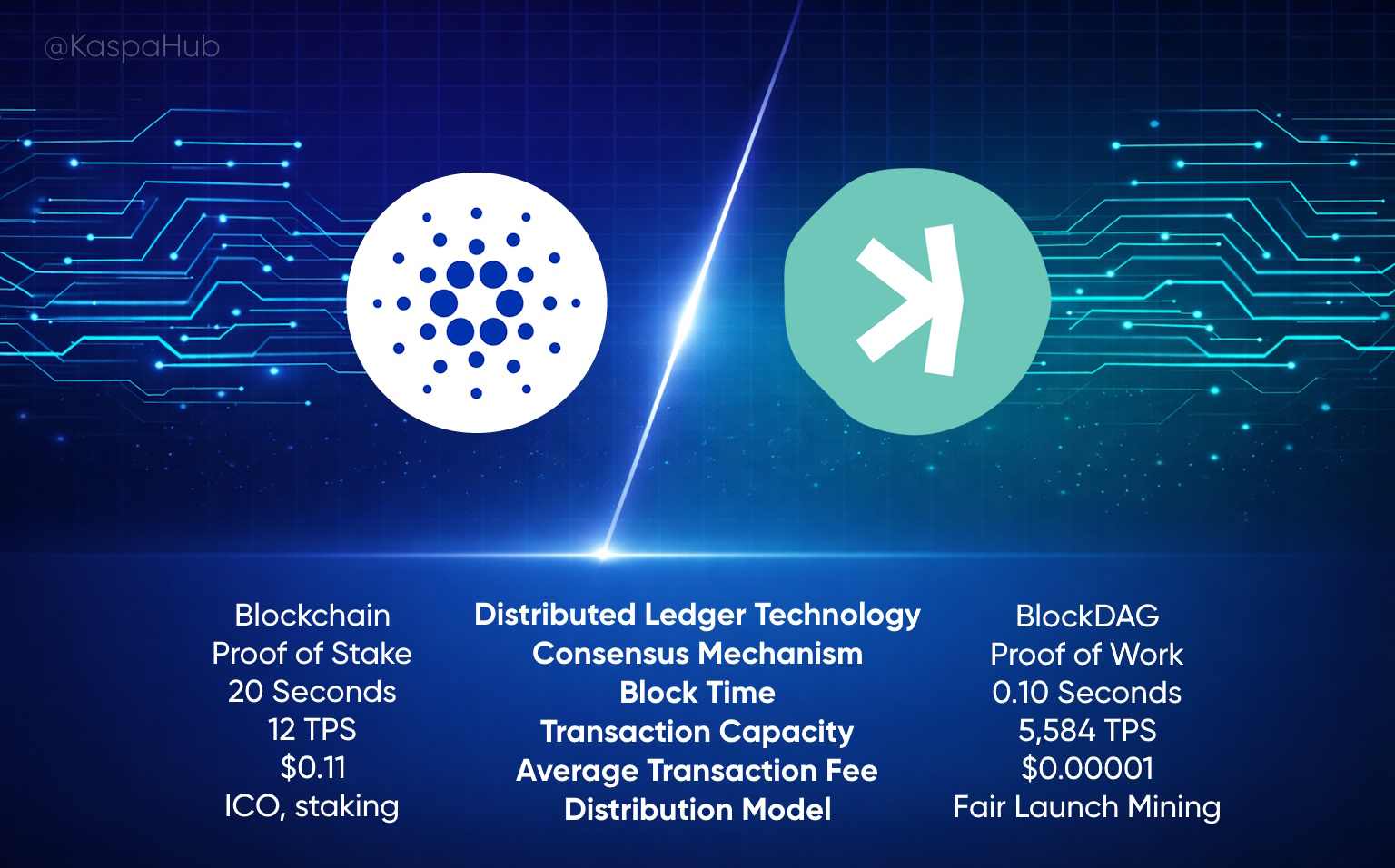
This article explores the key differences between Kaspa and Cardano, two prominent Layer 1 cryptocurrencies. It examines how each project approaches speed, security, and decentralization-core challenges known as the blockchain trilemma.
Alright, let's talk about two very different takes on how blockchain should work-Kaspa and Cardano. On the surface, they’re both trying to tackle the same thing: how to scale without falling apart, stay secure without being a fortress, and keep things decentralized without turning into a club of elites. But how they go about it? That’s where things get interesting.
So, what's the real difference?
You’ve probably heard of the “blockchain trilemma.” It's like the impossible triangle: you get to pick two out of the three-security, scalability, decentralization-but not all at once. Or so we thought. Kaspa claims to have done it. And honestly? The numbers speak for themselves.
Kaspa isn't just fast-it’s blazingly fast. We're talking 10 blocks per second, pumping out up to 864,000 blocks every single day. And here’s the kicker: no sharding, no layer 2 sleight of hand. Just raw, Layer 1 performance, straight from a Proof-of-Work system that refuses to cut corners.
Compare that to Cardano, which ticks along at about 20 seconds per block. That’s not bad-unless you’ve seen what 0.1s block time feels like. (Spoiler: it feels like the internet should.)
Fast, Fair, and… Leaderless?
As the regulatory grip tightens in crypto, the right to privacy is increasingly under pressure. If you’re tired of handing over your passport just to buy a few satoshis, this list is for you. Here's your go-to guide to the most trusted crypto exchanges in 2025 that don’t require KYC. Stay private, stay sharp.
It’s 2025, and if you’ve been around the crypto block, you already know the drill: centralized exchanges want your ID, your address, and sometimes even a selfie holding a piece of paper. Why? Because KYC (Know Your Customer) laws have become the default in most countries. But what if you’re just trying to swap some coins, and you’re not too keen on handing over your identity to a server you don’t control?
You’re not alone. The demand for no-KYC exchanges is quietly growing-especially among privacy-conscious users, casual traders, or those in regions where crypto regulations are fuzzy or downright aggressive. These platforms don’t ask who you are. They just let you trade.
Important Note: Some of these exchanges may limit withdrawal amounts or specific features for non-verified users. So always double-check their rules before throwing in your life savings. And yeah, use a VPN if your country blocks access (just make sure your IP doesn’t jump countries-most exchanges will lock you out faster than you can say "oops").